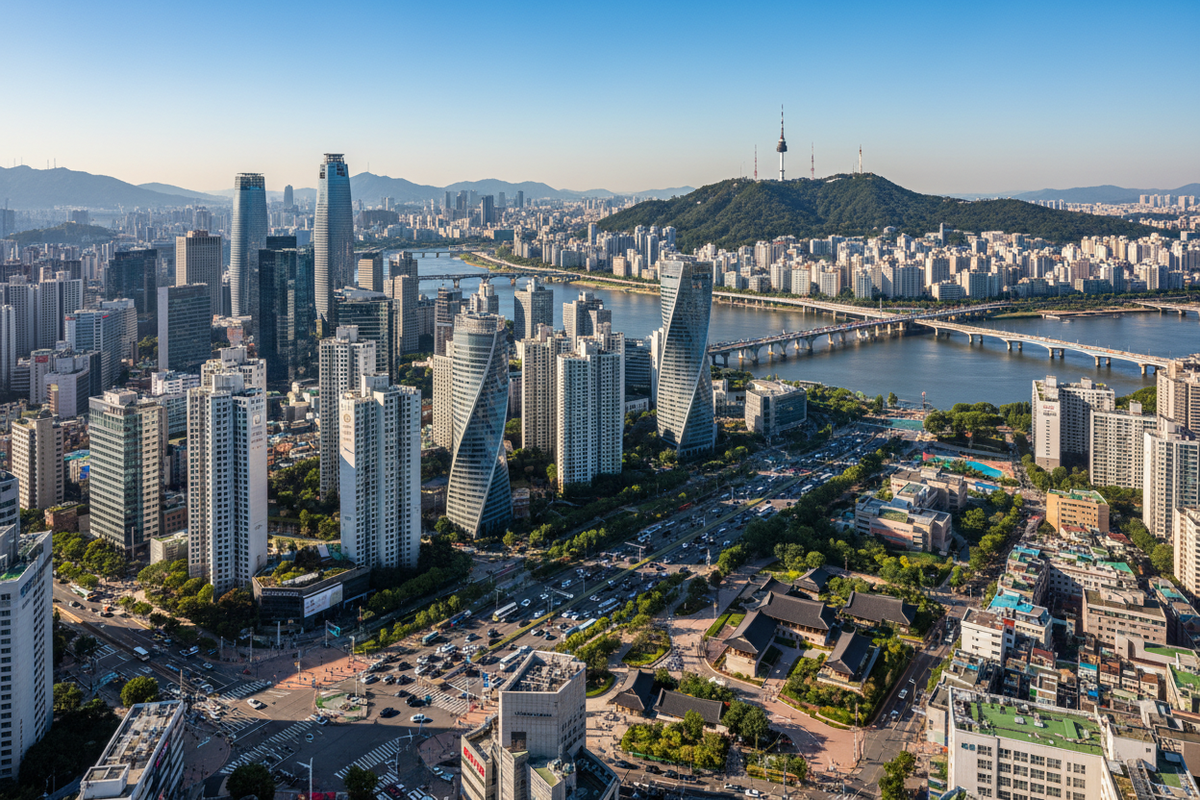
Seoul After Sunset begins with a simple idea: a destination becomes easier to understand when you stop treating it as a list of separate attractions. In South Korea, the most memorable parts of a day are often the transitions between planned stops—the walk to a quieter street, the change in sound near a station, or the moment when a familiar view looks different because the weather has shifted. This story follows those transitions and uses them as the structure of the route.
The first impression
Seoul After Sunset begins with a simple idea: a destination becomes easier to understand when you stop treating it as a list of separate attractions. In South Korea, the most memorable parts of a day are often the transitions between planned stops—the walk to a quieter street, the change in sound near a station, or the moment when a familiar view looks different because the weather has shifted. This story follows those transitions and uses them as the structure of the route.
A useful journey does not have to be tightly scheduled. For this route, it helps to choose one or two anchors and let the surrounding hours remain flexible. Start earlier than the busiest period if possible, but do not turn the morning into a race. Pause when a neighborhood becomes interesting, take a different street when the obvious route feels crowded, and allow enough time for meals and transport to become part of the experience rather than interruptions. The route works best when nearby places are connected into one continuous movement. That approach reduces unnecessary backtracking and leaves more attention for the surroundings. Look for changes in architecture, terrain, light and pace. These details create a stronger sense of place than checking off a long list, and they often lead to the small discoveries that are difficult to plan in advance.
Finding the rhythm
A useful journey does not have to be tightly scheduled. For this route, it helps to choose one or two anchors and let the surrounding hours remain flexible. Start earlier than the busiest period if possible, but do not turn the morning into a race. Pause when a neighborhood becomes interesting, take a different street when the obvious route feels crowded, and allow enough time for meals and transport to become part of the experience rather than interruptions.
The route works best when nearby places are connected into one continuous movement. That approach reduces unnecessary backtracking and leaves more attention for the surroundings. Look for changes in architecture, terrain, light and pace. These details create a stronger sense of place than checking off a long list, and they often lead to the small discoveries that are difficult to plan in advance. Some of the strongest memories come from ordinary moments. A local shop opening for the day, a quiet bench at the edge of a viewpoint, a ferry crossing, or a side street that does not appear in a typical itinerary can change the tone of the entire journey. TravelMapStories focuses on these in-between moments because they reveal how a destination feels when you are not standing in front of its most photographed landmark.
Following the route
The route works best when nearby places are connected into one continuous movement. That approach reduces unnecessary backtracking and leaves more attention for the surroundings. Look for changes in architecture, terrain, light and pace. These details create a stronger sense of place than checking off a long list, and they often lead to the small discoveries that are difficult to plan in advance.
Some of the strongest memories come from ordinary moments. A local shop opening for the day, a quiet bench at the edge of a viewpoint, a ferry crossing, or a side street that does not appear in a typical itinerary can change the tone of the entire journey. TravelMapStories focuses on these in-between moments because they reveal how a destination feels when you are not standing in front of its most photographed landmark. Slowing down is not the same as doing less without purpose. It means deciding where time matters most. Give a landscape enough time to change, stay in a neighborhood after the first impression, and avoid filling every open hour simply because it exists. A route with breathing room is easier to adapt to weather, energy and local conditions, and it is usually easier to remember afterward.
The details worth noticing
Some of the strongest memories come from ordinary moments. A local shop opening for the day, a quiet bench at the edge of a viewpoint, a ferry crossing, or a side street that does not appear in a typical itinerary can change the tone of the entire journey. TravelMapStories focuses on these in-between moments because they reveal how a destination feels when you are not standing in front of its most photographed landmark.
Slowing down is not the same as doing less without purpose. It means deciding where time matters most. Give a landscape enough time to change, stay in a neighborhood after the first impression, and avoid filling every open hour simply because it exists. A route with breathing room is easier to adapt to weather, energy and local conditions, and it is usually easier to remember afterward. Practical planning still matters. Check current opening hours, local transport information, seasonal conditions and any official requirements before traveling. Keep key reservations and addresses accessible offline where possible. Times, prices and availability can change, so this story should be used as general travel information and inspiration rather than as a guarantee of current conditions.
When to slow down
Slowing down is not the same as doing less without purpose. It means deciding where time matters most. Give a landscape enough time to change, stay in a neighborhood after the first impression, and avoid filling every open hour simply because it exists. A route with breathing room is easier to adapt to weather, energy and local conditions, and it is usually easier to remember afterward.
Practical planning still matters. Check current opening hours, local transport information, seasonal conditions and any official requirements before traveling. Keep key reservations and addresses accessible offline where possible. Times, prices and availability can change, so this story should be used as general travel information and inspiration rather than as a guarantee of current conditions. By the end of the route, the goal is not to have seen everything. It is to leave with a clearer mental map of the place: how one district connects to another, where the atmosphere changes, which moments felt unexpectedly personal, and what you would return to explore more slowly. That is often the difference between visiting a destination and beginning to understand it.
Practical notes
Practical planning still matters. Check current opening hours, local transport information, seasonal conditions and any official requirements before traveling. Keep key reservations and addresses accessible offline where possible. Times, prices and availability can change, so this story should be used as general travel information and inspiration rather than as a guarantee of current conditions.
By the end of the route, the goal is not to have seen everything. It is to leave with a clearer mental map of the place: how one district connects to another, where the atmosphere changes, which moments felt unexpectedly personal, and what you would return to explore more slowly. That is often the difference between visiting a destination and beginning to understand it. Seoul After Sunset begins with a simple idea: a destination becomes easier to understand when you stop treating it as a list of separate attractions. In South Korea, the most memorable parts of a day are often the transitions between planned stops—the walk to a quieter street, the change in sound near a station, or the moment when a familiar view looks different because the weather has shifted. This story follows those transitions and uses them as the structure of the route.
Leaving with a different map
By the end of the route, the goal is not to have seen everything. It is to leave with a clearer mental map of the place: how one district connects to another, where the atmosphere changes, which moments felt unexpectedly personal, and what you would return to explore more slowly. That is often the difference between visiting a destination and beginning to understand it.
Seoul After Sunset begins with a simple idea: a destination becomes easier to understand when you stop treating it as a list of separate attractions. In South Korea, the most memorable parts of a day are often the transitions between planned stops—the walk to a quieter street, the change in sound near a station, or the moment when a familiar view looks different because the weather has shifted. This story follows those transitions and uses them as the structure of the route. A useful journey does not have to be tightly scheduled. For this route, it helps to choose one or two anchors and let the surrounding hours remain flexible. Start earlier than the busiest period if possible, but do not turn the morning into a race. Pause when a neighborhood becomes interesting, take a different street when the obvious route feels crowded, and allow enough time for meals and transport to become part of the experience rather than interruptions.
Final thoughts
By the end of the route, the goal is not to have seen everything. It is to leave with a clearer mental map of the place: how one district connects to another, where the atmosphere changes, which moments felt unexpectedly personal, and what you would return to explore more slowly. That is often the difference between visiting a destination and beginning to understand it. Some of the strongest memories come from ordinary moments. A local shop opening for the day, a quiet bench at the edge of a viewpoint, a ferry crossing, or a side street that does not appear in a typical itinerary can change the tone of the entire journey. TravelMapStories focuses on these in-between moments because they reveal how a destination feels when you are not standing in front of its most photographed landmark.